Blog

Your child’s first dental visit is an important step toward building healthy habits that can last a lifetime. For many parents, however, the first appointment comes with questions. When should you schedule it? What happens during the visit? What should you bring? And what if your child feels nervous or refuses to cooperate?
The good news is that a first dental visit does not have to be stressful. Pediatric dental visits are designed to introduce children to the dental environment, check their developing smiles, and give parents practical guidance for keeping little teeth healthy at home.
At Kidtastic Pediatric Dental & Orthodontics, our goal is to make each visit comfortable, positive, and age-appropriate for children and reassuring for parents.
When Should Your Child First See a Dentist?
The American Academy of Pediatric Dentistry recommends that children have their first dental examination when their first tooth appears and no later than 12 months of age. Starting early gives your child’s dentist an opportunity to monitor oral development, assess cavity risk, and help you establish healthy habits from the beginning.
You do not need to wait until your child has a full set of baby teeth.
Even with only one or two teeth, an early visit can help parents understand:
- How to clean their child’s teeth properly
- How much fluoride toothpaste to use
- Which foods and drinks may increase cavity risk
- What signs of tooth decay to watch for
- How often their child should receive dental care
- What to expect as the mouth and teeth develop
An early dental home also gives your child the opportunity to become familiar with the dentist before a dental problem occurs.
What Happens During a Child’s First Dental Visit?
Every child is different, so the appointment can vary based on age, oral health, medical history, and comfort level. A typical first visit may include several of the following steps.
1. Getting Comfortable
The first few minutes are about helping your child feel comfortable in a new environment. The dental team may talk with your child, introduce them to the dental chair, or explain some of the equipment in a simple, age-appropriate way.
For a young child, simply becoming familiar with the office can be an important part of the appointment.
2. Reviewing Medical and Dental History
The dentist may ask about your child’s overall health, medications, allergies, previous dental experiences, eating and drinking habits, brushing routine, and any concerns you have noticed.
This information helps the dental team understand your child’s individual needs.
3. A Gentle Oral Examination
The dentist will examine your child’s teeth, gums, and other areas of the mouth. Depending on your child’s age and cooperation, the visit may also include an assessment of oral growth, development, bite, and cavity risk.
The American Academy of Pediatric Dentistry recommends individualized assessment and preventive guidance rather than treating every child’s appointment exactly the same way.
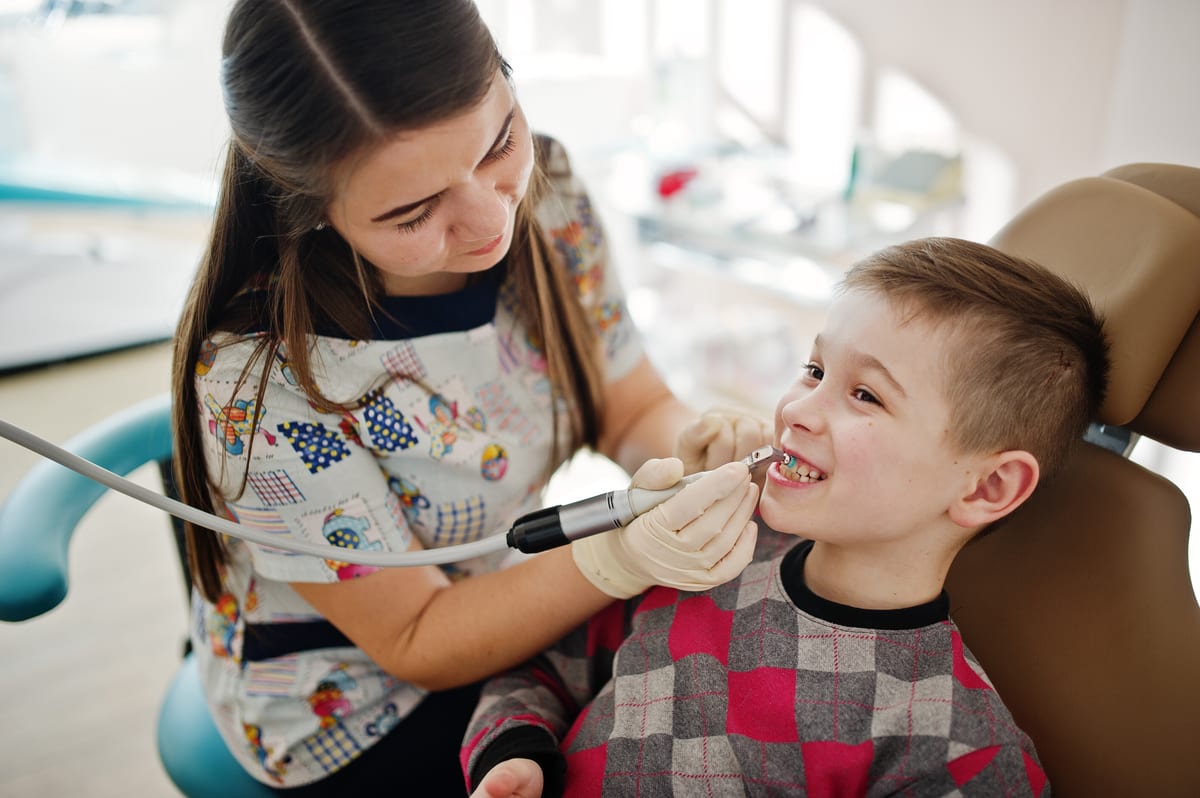
4. Cleaning and Preventive Care
If appropriate for your child’s age and needs, the dental team may clean the teeth and remove plaque or deposits.
A professional cleaning can also help a young child become familiar with dental instruments and sensations in a positive setting.
5. Fluoride Guidance or Treatment
Your child’s dentist may discuss fluoride exposure and recommend an appropriate preventive approach based on your child’s age, oral health, and individual risk.
Professional fluoride treatment may be recommended when appropriate, but preventive care should be personalized rather than automatically provided to every child.
6. Parent Education
One of the most valuable parts of a first visit is the conversation with the parent.
Your dental team can answer questions about brushing, flossing, fluoride, nutrition, pacifiers, thumb sucking, teething, and other aspects of your child’s oral development.
Will My Child Need X-Rays?
Not necessarily.
Dental X-rays are not automatically required at every first visit. Whether radiographs are appropriate depends on factors such as your child’s age, dental history, clinical findings, and risk for oral disease.
The AAPD recommends that radiographic assessments be determined according to the child’s history, clinical findings, and susceptibility to dental disease.
If your child’s dentist recommends an X-ray, the team can explain why it may be useful and what information it can provide.
What Should You Bring to the Appointment?
A little preparation can make the visit easier. Consider bringing:
- Your child’s medical and dental history
- A list of current medications and allergies
- Insurance information, if applicable
- Previous dental records or X-rays, if your child has seen another dentist
- A list of questions or concerns
- A favorite comfort item for a younger child
If your child has a medical condition or takes medication regularly, make sure the dental team has accurate information before treatment begins.
How Can I Prepare My Child for the Dentist?
Children often feel more comfortable when they know what to expect.
Here are a few simple ways to prepare before the appointment:
Talk About the Dentist Positively
Use simple, positive language. Explain that the dentist helps keep their teeth clean and healthy.
Try not to describe dental treatment with words that could create fear, such as “pain,” “shot,” or “drill,” unless the dental team specifically recommends how to explain a procedure.
Practice at Home
Play pretend dentist with your child. Take turns counting teeth, opening wide, and brushing a stuffed animal’s teeth.
Making the experience familiar can help reduce the fear of the unknown.
Read a Dental Story Together
Children’s books about visiting the dentist can make the experience easier to understand. Let your child ask questions and talk about what they see in the pictures.
Choose a Good Time of Day
Whenever possible, schedule the appointment when your child is usually rested and in a good mood. A tired or hungry child may have a harder time adjusting to a new environment.
Bring Something Familiar
A favorite stuffed animal, blanket, or small comfort item may help a young child feel more secure.
What If My Child Is Afraid or Cries?
It is completely normal for a child to feel uncertain about their first dental visit. A new building, unfamiliar people, and new sounds can be overwhelming.
Crying does not mean the visit has failed.
A pediatric dental team can take time to introduce the child to the environment, explain what is happening, and build trust gradually. Techniques such as tell-show-do can help children understand what will happen before a procedure begins.
If your child becomes upset, let the dental team know. The appointment can often be adjusted based on the child’s age, behavior, and comfort level.
The goal is not simply to complete a checklist. It is to help your child develop a positive relationship with dental care.
Should Parents Stay With Their Child?
This can depend on the child’s age, comfort level, and the practice’s approach.
For very young children, having a parent nearby may provide reassurance. As children become more comfortable with the dental environment, some may feel confident going into the treatment area independently.
If you have questions about staying with your child, discuss your preferences with the dental team before the appointment.
How Can I Protect My Child’s Teeth Between Visits?
Good dental habits begin at home.
Parents can help children protect their teeth by:
- Brushing twice a day with fluoride toothpaste appropriate for the child’s age
- Helping young children brush effectively
- Cleaning between teeth when the teeth touch one another
- Limiting frequent sugary snacks and drinks
- Offering water between meals
- Following the dentist’s recommendations for fluoride
- Scheduling regular dental visits based on the child’s individual needs
The AAPD recommends ongoing preventive care and oral-health counseling based on each child’s risk and development.
When Should Children Have Dental Checkups?
Many children are seen about every six months, but there is no single schedule that is right for every child.
The appropriate frequency depends on factors such as cavity risk, oral health, age, development, and other individual needs. Your child’s pediatric dentist can recommend a schedule that fits their situation.
Regular visits allow the dental team to monitor changes over time and address concerns before they become more complicated.
Building a Dental Home From the Start
Your child’s first dental appointment is about more than checking for cavities. It is the beginning of an ongoing relationship between your child, your family, and their dental team.
The American Academy of Pediatric Dentistry recommends establishing a dental home no later than 12 months of age. A dental home provides continuing preventive and comprehensive oral health care that can change as a child grows.
At Kidtastic Pediatric Dental & Orthodontics, we work to create a welcoming environment where children can become comfortable with dental care while parents receive the guidance they need to support healthy smiles at home.
If your child is ready for their first dental visit, schedule an appointment with Kidtastic Pediatric Dental & Orthodontics and take the first step toward a lifetime of healthy dental habits.
Frequently Asked Questions
What age should a child have their first dental visit?
The AAPD recommends a child’s first dental examination when the first tooth erupts and no later than 12 months of age.
What if my baby does not have many teeth yet?
You do not need to wait for more teeth to appear. An early dental visit gives the dentist an opportunity to assess your child’s developing mouth and provide parents with guidance on cleaning, fluoride, feeding, and cavity prevention.
Will my child get a cleaning at the first visit?
A cleaning may be provided when appropriate based on your child’s age, oral health, and cooperation. The dental team may also use the visit to help your child become familiar with dental instruments and procedures.
Will my child need dental X-rays?
Not every child needs X-rays at the first visit. The decision depends on the child’s dental history, clinical findings, age, and risk factors.
What should I do if my child is nervous about the dentist?
Keep your language positive, practice at home, read books about dental visits, and bring a familiar comfort item. Let the dental team know about your child’s anxiety so they can adapt the visit to your child’s needs.
Should I stay with my child during the appointment?
For younger children, a parent’s presence can provide reassurance. The best approach can vary by age, behavior, and the child’s comfort level, so discuss your preferences with the dental team.
How often should my child visit the dentist?
Many children have dental checkups approximately every six months, but the appropriate schedule depends on individual oral health and cavity risk. Your pediatric dentist can recommend the right interval for your child.
How can I prevent cavities at home?
Help your child brush twice daily with fluoride toothpaste, clean between teeth when appropriate, limit frequent sugary foods and drinks, and follow the preventive recommendations provided by your child’s dental team.