Blog
Protecting your little one’s teeth from cavities involves more than regular brushing and flossing. Back teeth have deep grooves that can trap food and bacteria, making them particularly vulnerable to tooth decay.
Dental sealants add an extra layer of protection by covering these grooves with a thin coating. But when should kids receive them, and how long does that protection last?
Understanding the recommended ages, treatment process, and expected lifespan can help parents make informed decisions about their children’s oral health.
At What Age Should Kids Get Dental Sealants?
Most children benefit from dental sealants when their permanent molars first emerge, usually around ages 6 and 12.
These ages matter because newly erupted permanent teeth are especially vulnerable to cavities.
The recommended timeline generally follows two stages:
- Ages 6–7: First permanent molars usually emerge behind the baby teeth. Applying sealants soon after eruption helps protect their chewing surfaces.
- Ages 11–13: Second permanent molars typically emerge. These teeth may also benefit from protective coatings.
- Earlier ages: Some baby molars with deep grooves may benefit from sealants, particularly when cavity risk is elevated.
A pediatric dentist evaluates tooth development, eruption patterns, and cavity risk before recommending treatment.
Why Are Dental Sealants Important for Kids?
Permanent molars contain narrow pits and grooves that toothbrush bristles may not completely reach. Bacteria and food particles can build up in these areas, increasing the risk of cavities.
Sealants create a smooth protective barrier that prevents food and plaque from settling into vulnerable chewing surfaces.
According to the Centers for Disease Control and Prevention, sealants can prevent approximately 80% of cavities in back teeth during the first two years after application.
However, they do not protect every tooth surface. Daily brushing, flossing, and regular dental examinations remain necessary.
How Long Do Dental Sealants Last?
Dental sealants can remain effective for several years, with many lasting five to ten years. However, their lifespan varies depending on placement, chewing habits, and routine maintenance.
Some coatings stay intact longer, while others gradually wear down or partially detach.
Factors affecting durability include:
- Chewing pressure: Repeated biting forces may gradually wear down the protective material.
- Teeth grinding: Grinding can increase wear on chewing surfaces.
- Placement conditions: Proper isolation from saliva helps the coating bond securely.
- Dental maintenance: Routine examinations allow early identification of damaged or missing material.
A pediatric dentist can check whether the protective layer remains intact and recommend repairs or reapplication when necessary.
What Happens During the Sealant Application Process?
Applying sealants is a quick, noninvasive procedure that generally requires no drilling or anesthesia.
The process typically involves five steps:
- Cleaning: The tooth surface is thoroughly cleaned to remove plaque and debris.
- Preparation: A conditioning solution prepares the enamel for bonding.
- Rinsing and drying: The surface is rinsed when appropriate and kept dry.
- Application: A thin coating is placed into the pits and grooves.
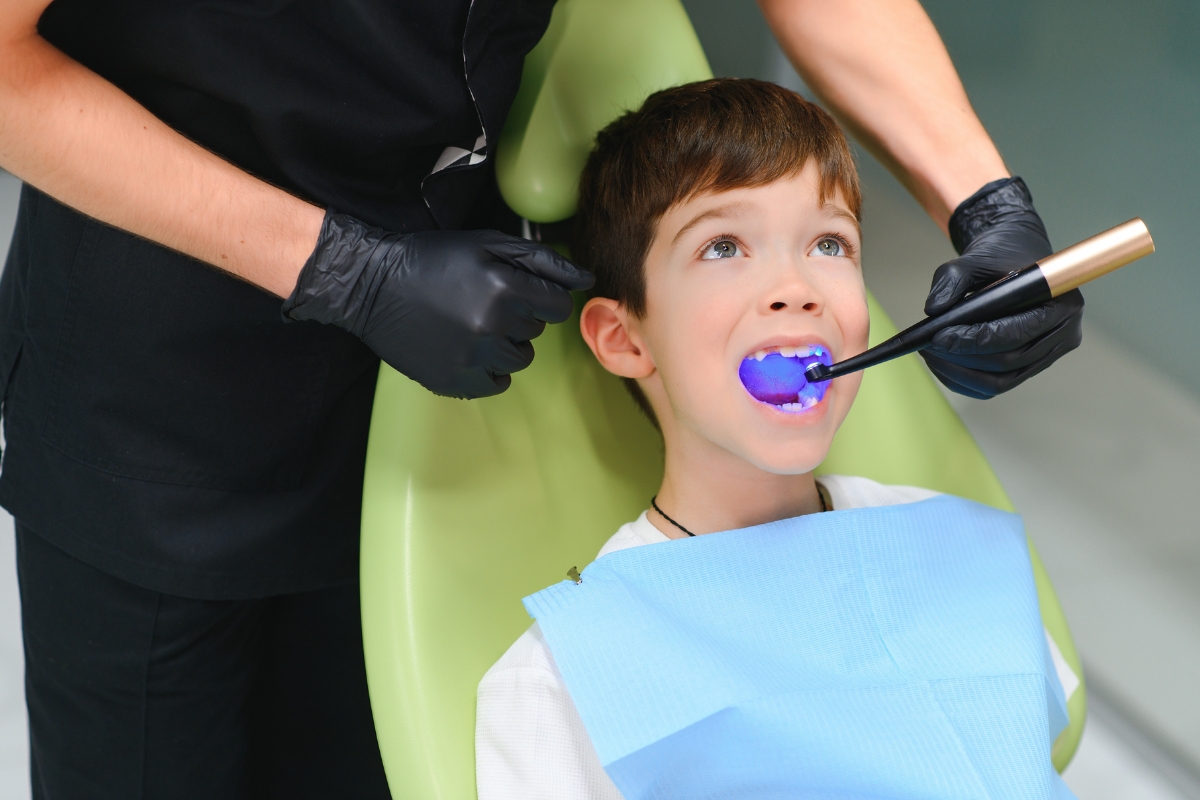
- Hardening: A curing light may be used to harden the material.
The procedure generally takes only a few minutes per tooth.
If you are unsure whether your little one needs this treatment, visit our dental office for an evaluation. A pediatric dentist can assess the chewing surfaces and explain whether additional cavity protection is appropriate.
How Can Parents Tell if Sealants Need Replacement?
Sealants can gradually wear down without causing discomfort. As a result, parents may not notice when the protective coating is damaged.
Possible signs include:
- Visible gaps or missing coating on a treated molar
- Rough or uneven chewing surfaces
- Food repeatedly becoming trapped in deep grooves
- Changes identified during a routine dental examination
Not every change indicates failure. A pediatric dental practitioner can examine the coating and determine whether repair or replacement is needed.
Can Kids Still Get Cavities After Sealant Treatment?
Yes, although dental sealants significantly reduce cavity risk on treated chewing surfaces, they cannot eliminate tooth decay
Cavities may still develop between teeth, near the gumline, or on untreated surfaces.
For continued protection, encourage:
- Twice-daily brushing with fluoride toothpaste
- Daily flossing between touching teeth
- Limited consumption of sugary drinks
- Regular preventive dental visits
- Periodic checks of existing sealants
Combining protective coatings with consistent oral hygiene offers more comprehensive cavity prevention.
Protect Growing Smiles With Preventive Dental Care
Applying protective coatings as permanent molars emerge can significantly reduce the risk of cavities. Although these coatings may last several years, routine examinations help ensure they continue protecting vulnerable teeth.
At Kidtastic Pediatric Dental and Orthodontics in Chandler, we encourage parents to prioritize preventive dental care throughout their little one’s development.
Looking for a reliable pediatric dentist in Chandler? Book an appointment today to discuss sealant treatment, evaluate your little one’s cavity risk, and take the next step toward a healthier smile.
Frequently Asked Questions
Are dental sealants safe for young children?
Yes, sealants are widely used in preventive pediatric dentistry. The materials have been studied for safety and effectiveness. Our pediatric dentist can explain the materials used and address any concerns before treatment.
Does getting sealants hurt?
No. Application is generally painless and does not require injections or drilling. The protective material is placed directly onto the tooth surface. Most kids can return to normal activities immediately afterward.
Can sealants be applied to baby teeth?
Yes. Sealants may benefit baby molars with deep grooves or increased cavity risk. Our pediatric dentist can evaluate whether treatment is appropriate based on tooth condition and expected eruption patterns.
Can children eat immediately after sealant application?
Yes. Once the coating has fully hardened, kids can generally eat and drink normally. Parents should follow any specific instructions provided during the appointment.
What happens if a sealant falls off?
A missing sealant leaves the tooth’s grooves exposed to plaque accumulation. A pediatric dentist can examine the surface and decide whether to reapply it. Replacing it early can help maintain cavity protection.
Are sealants necessary if kids brush regularly?
Regular brushing is essential, but toothbrush bristles may not reach narrow grooves in molars. Sealants provide additional protection in these areas. A dental exam can determine whether this preventive treatment would benefit your child.